Saturday, 9 June 2012

THE ARAB AWAKENING: ISLAM AND THE NEW MIDDLE EAST

Across the Arab world millions of women and men have taken to the streets, showing that dictators can be overthrown without weapons. But what happens now?

Tariq Ramadan is one of the most acclaimed figures in the analysis of Islam and its political dimensions today. In The Arab Awakening he explores the opportunities and challenges across North Africa and the Middle East, as they look to create new, more open societies. He asks: can Muslim countries bring together Islam, pluralism and democracy without betraying their identity? Will the Arab world be able to reclaim its memory to reinvent education, women’s rights, social justice, economic growth and the fight against corruption? Can this emancipation be envisioned with Islam, experienced not as a straitjacket, but as an ethical and cultural wealth?

Arguing that the debate cannot be reduced to a confrontation between two approaches - the modern and secular versus the traditional and Islamic - Ramadan demonstrates that not only are both of these routes in crisis, but that the Arab world has an historic opportunity: to stop blaming the West, to jettison its victim status and to create a truly new dynamic.

Tariq Ramadan offers up a challenge to the Middle East: what enduring legacy will you produce, from the historic moment of the Arab Spring?

Wednesday, 1 February 2012

ISLAMOPHOBIA: The Ideological Campaign Against Muslims by Stephen Sheehi


    SYNOPSIS
    Islamophobia: The Ideological Campaign Against Muslims examines the rise of anti-Muslim and anti-Arab sentiments in the West following the end of the Cold War through GW Bush’s War on Terror to the Age of Obama. Using “Operation Desert Storm” as a watershed moment, Stephen Sheehi examines the increased mainstreaming of Muslim-bating rhetoric and explicitly racist legislation, police surveillance, witch-trials and discriminatory policies towards Muslims in North America and abroad.
    The book focuses on the various genres and modalities of Islamophobia from the works of rogue academics to the commentary by mainstream journalists, to campaigns by political hacks and special interest groups. Some featured Islamophobes are Bernard Lewis. Fareed Zakaria, Thomas Friedman, David Horowitz, Ayaan Hirsi Ali, Irshad Manji, George W. Bush, Dick Cheney, John McCain, Hilary Clinton and Barack Obama. Their theories and opinions operate on an assumption that Muslims, particularly Arab Muslims, suffer from particular cultural lacuna that prevent their cultures from progress, democracy and human rights. While the assertion originated in the colonial era, Sheehi demonstrates that it was refurbished as a viable explanation for Muslim resistance to economic and cultural globalization during the Clinton era. Moreover, the theory was honed into the empirical basis for an interventionist foreign policy and propaganda campaign during the Bush regime and continues to underlie Barack Obama’s new internationalism.
    If the assertions of media pundits and rogue academics became the basis for White House foreign policy, Sheehi also demonstrates how they were translated into a sustained domestic policy of racial profiling and Muslim-baiting by agencies from Homeland Security to the Department of Justice. Furthermore, Sheehi examines the collusion between non-governmental agencies, activist groups and lobbies and local, state and federal agencies in suppressing political speech on US campuses critical of racial profiling, US foreign policy in the Middle East and Israel. While much of the direct violence against Muslims on American streets, shops and campuses has subsided, Islamophobia runs throughout the Obama administration. Sheehi, therefore, concludes that Muslim and Arab-hating emanate from all corners of the American political and cultural spectrum, serving poignant ideological functions in the age of economic, cultural and political globalization.
    Author
    Stephen Sheehi is Associate Professor of Arabic and Arab Culture and Director of the Arabic 
    Program at the University of South Carolina. He teaches intellectual, literary, cultural, and artistic heritage of Arabo-Islamic world. His work interrogates various modalities of self, society, art and political economy with Arab modernity.
    He is the author of Foundations of Modern Arab Identity, which examines the foundational writing of intellectuals of the 19th century Arab Renaissance or al-nahdah al-`arabiyah. The book discusses how Arab intellectuals offered a powerful cultural self-criticism along side their critiques and discussions of modernity, capitalism and European imperialism.
    He has also published in journals such as International Journal of Middle Eastern StudiesThe 
    British Journal of Middle East StudiesDiscourseCritiqueThe Journal of Arabic Literature, and 
    The Journal of Comparative South Asian, African, and Middle Eastern Studies.
    He has also written on the contemporary politics in Lebanon and academic repression in the United States.
    In addition to his scholarship, Prof. Sheehi has also been active in social justice movements in the Middle East and North America.

    Product Details

    • Paperback: 272 pages
    • Publisher: Clarity Press (February 1, 2011)
    • Language: English
    • ISBN-10: 0932863671
    • ISBN-13: 978-0932863676
    • Product Dimensions: 9 x 6 x 0.7 inches

Tuesday, 31 January 2012

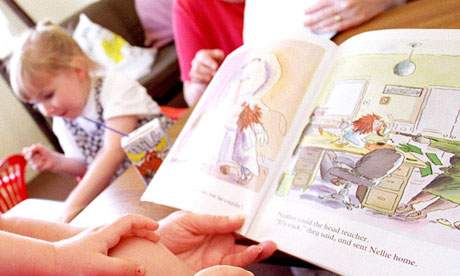
How can we make every day a World Book Day?

http://www.guardian.co.uk/childrens-books-site/2012/jan/30/world-book-day-book-doctor

'Schools need more time for reading aloud, choosing and sharing the pleasure of reading books and not just extracts'

World Book Day always generates huge enthusiasm for reading in my children's school. The children love dressing up as a book character and the £1 voucher means they end up owning a new book and so reading more. All the teachers suddenly seem very excited about reading too. Do you have any suggestions as to how schools can keep that excitement about reading going all through the school year?


Schools need more time for reading aloud, choosing and 

sharing the pleasure of reading books and not just extracts
I quite agree about the stimulation and success of World Book Day, which falls on March 1 this year. Every year it seems to get bigger and better and it means that schools have the chance to concentrate on the pleasure of reading in its widest sense. Knowing different authors, finding out who you like – and who you don't - plays a key role in becoming a confident and enthusiastic reader.

Whether you spend the £1 voucher on a special World Book Day title or on any other book means every child can add a title to their book store. All research shows that owning books plays a key role in encouraging reading and we need to do all we can to make that happen.

But it is not just because children end up owning books that World Book Day inspires. It is also because it concentrates on stories and, as you say with the dressing up, the characters in them. Ensuring children have a whole view of books in terms of the stories and the parts played in them is the surest way to raise enthusiasm for reading.

Schools need more time for reading aloud, book choosing and sharing the pleasure of reading whole books and not just extracts. Just some of those could make reading exciting all through the year.

Monday, 30 January 2012

What are you reading today?

It's an endlessly interesting conversation-starter, and we'd like to record your answers on a Flickr gallery

http://www.guardian.co.uk/books/booksblog/2012/jan/27/what-are-you-reading-today

What are you reading? is often the start of a great conversation. We swap book recommendations and write about the books we've just readon the site, but now we'd like to invite you to answer the question in pictures – don't tell us, show us.
To do this we have started a Flickr group called What are you reading today? where we invite you to upload your photos and share with us what you are reading. You can post up to seven photos a week in the group, so if you like, you can share what you are reading every day and use it a bit like a visual book diary. This is an experiment so it's up to you which way it goes and what it turns into, but it might be a great way of getting a moving picture of what books are proving the most popular with readers.

The photo can be a picture of you reading your book or just a snap of the cover. As long as we can see the title, we don't mind. And, as library goers across the UK mark Libraries Day on 4 February, this seems the be the perfect moment to show your support for your library by posting a picture of the book you've just borrowed.

If you have any questions, or any problems uploading your photos to the group, please let me know in the thread below. If you're on Twitter you are also welcome to tweet us your photos @guardianbooks.
Readers on the London tube. Photograph: Sarah Lee for the Guardian 

An Emirati children's book author talks about the importance of supporting literacy

http://www.thenational.ae/arts-culture/books/an-emirati-childrens-book-author-talks-about-the-importance-of-supporting-literacy

Jan 30, 2012 

The Sharjah-born writer Nadia Saleem Al Kalbani had decided from the beginning of her career that her children's book characters would display human emotions. Existing children's books place too much emphasis on "direct advice and educational direction", she said.

"I love honesty in writing and I love humane writing," she said.

Her book A Sweet Word features a young man who expresses his joys and fears by writing them down on small pieces of paper that he hides inside his pocket. According to Al Kalbani, these words become the man's "road map, which leads him to live his life in harmony with his neighbours - the inhabitants of the Earth".

Illustrations in her book are kept very simple for her young readership.

"I wanted to give children something different, something noble but entertaining and effective - and at the same time something that is humane," she said. "My characters are not ideal and they are not angels; they make mistakes and get frustrated at times."
Nadia Saleem Al Kalbani

Al Kalbani was one of two Emirati writers longlisted for the Sheikh Zayed Book Award for children's literature, although she was not on the shortlist when it was announced last week. She said the nomination alone made her feel successful and that she's grateful for the opportunity to showcase her work to a wider audience.

"Writers should not write aiming to win a prize - the prize will come to honour and encourage [writers]. The prize or nomination is a confirmation to tell you, 'Yes, I read your book. Thank you, I enjoyed it'."

Al Kalbani's book - her first - was published in March 2011 and all copies were distributed by hand to young people, at no cost.

"I don't consider writing a job - I don't get paid for my writing and I don't work for anyone," the author said, adding that she draws full-time as well. She also organises workshops related to children's literacy, some of which are supported by government entities.

As a young writer, Al Kalbani used to find inspiration in the phrases others had written on the walls of the old quarters of the UAE. While no one in her family directly encouraged her to write children's stories, her longlisted work was, according to her, "originally presented to the soul of my father and the heart of my mother.

"When I wrote, they stood by me and read my writing and were happy for me. I believe that our journey through life in the company of our families plays a big role in forming the person we turn out to be," she said.

Promoting literacy among children is something she feels passionately about. In her opinion, books are too expensive, so a non-profit company that will print, publish, translate and distribute children's books at nominal prices should be established.

"This company would aim to encourage a love of reading - reading in actual fact is not a luxury, it is a necessity," she said.

"This project is for human development and it needs authors, painters and translators who don't aim to make money from children's books - it's the right of each young and small palm to have a book," she said.

Although A Sweet Word is aimed at readers age 12 and above, the work's strapline is "Thoughts for children … young and old".

The work, Al Kalbani said, is dedicated to "childhood, wherever it is.

"Childhood could be in the heart of an old man, a passing scene in life or a sweet poem. I would like to imagine that my small book might wake up the child in us."

Wednesday, 25 January 2012

My father was a freedom fighter

Recently i read the book, 'My father was a freedom fighter' by Ramzy Baroud. This is the first time that i have read a book on Palestine in English. Its a nice book that gives a nice description of the events in the author's life along with the Palestine history. The book also reflects the sense of humour, the Palestinians possess. The humour in times of danger is something unbelievable. The events from the times of Ramzy's grand father till the death of his father are mentioned in brief. The Suez conflict, Yom Kippur war, Camp David Accord, Oslo accord, the withdrawal of Israeli forces from Gaza, the victory of Hamas find a mention in this novel. The atrocities of the Israelis and the struggle of the Palestinians are given in a clear manner. Ramzy's grandfather was forced to leave his native, Beit Daras and he felt and hoped that he would return soon to his house. But neither the author's grandfather nor his father were able to return back. The language is bit difficult in some places, but a slow and careful reading can manage this. A nice book for those who to wish to have a picture of Palestine.

Monday, 16 January 2012

Mirror launches year-long reading campaign


The Daily Mirror is to run a We Love Reading campaign, backed by poet laureate Carol Ann Duffy, throughout 2012. 
In today's edition (16th January), the newspaper said it aims to "open up the world of possibilities that it [reading] can bring to everyone", and was "particularly committed to helping young people learn to love reading and enjoy its endless benefits." In its leader column, the tabloid urged parents to encourage their children to read. "Let them discover the pleasure of curling up with a good book - or a Kindle!", it said. 
Also in today's paper, Duffy paid tribute to the role of her small local library in Stafford in fostering her reading habit in childhood, as well as supportive parents and an inspirational teacher at secondary school. "Reading meant to me, then as now, liberation, celebration, affirmation," she wrote. "To read is to be entertained, challenged, reminded, enthralled or changed. It requires the mind and the imagination to engage actively with the page and so it makes the thinking part of ourselves fitter."

Thursday, 5 January 2012

Emirati women create orphanage for unwanted books


Dec 31, 2011 


DUBAI // Two Emirati women have created a virtual orphanage for unwanted books, with the hopes of finding them new homes and encouraging a culture of reading.
Mariam Al Khayat and Shaikha Al Shamsi, both 28, started The Book Shelter initiative last month. Anyone in the UAE can either donate books or log on to their website and browse titles they would like to adopt, free of charge. The shelter will even handle the delivery.
"I think people see reading as a chore," Ms Al Khayat said. "Everything is fast-paced now and when you read, you need to sit quietly. Maybe that's why they don't read as much."
Only 50 per cent of Emiratis own more than 50 books, according to research being carried out by the Sheikh Saud Bin Saqr Al Qasimi Foundation for Policy Research in Ras Al Khaimah.
Fatma Al Bannai, the founder of a writing group,
has already donated four books to The Book Shelter.
Samar Farah, co-author of the study, which is to be published early next year, said: "Literacy rates are really high among Emiratis, but literacy is not the actual problem - it's the lack of a reading culture that is more problematic."
According to a Unesco study conducted between 2000 and 2008, 90 per cent of Emiratis over the age of 15 can read.
"We were shocked to learn that so many people don't like to read, and we want to make it easier for people to pick a book," said Ms Al Shamsi. "We think reading is very important. Personally, we are hard-core bookworms."
The women currently have 100 books on their website, but they will be adding another 150 in the coming weeks. Their collection includes children's literature, fiction and non-fiction in Arabic, English and French.
Ms Al Shamsi said they plan to set up a permanent collection point in each emirate as the project grows. First, though, they will set up in Maraya Art Centre in Al Qasba, Sharjah.
"In the long term, we want it to be sustained by the community itself," said Ms Al Shamsi. "We want to see people doing it on their own: recycling, donating, and adopting books, which in turn will promote a reading culture."
Sakina Eb Iha, a 19-year-old student from India, has donated two books and adopted three from The Book Shelter. "I really like sending books to people and spreading the love for reading," she said.
Fatma Al Bannai, the 23-year-old founder of an Emirati women's writing group, has already donated four books to The Book Shelter.
"I had these books for a while and they were just collecting dust on my bookshelf," she said. "When I heard about this initiative I was glad to donate them so that other people can enjoy these books as well."
Visit blog.thebookshelter.ae to donate or adopt books

Tuesday, 29 November 2011

The Qur'an: A Biography (Books That Changed the World)

by Bruce Lawrence


ISBN13: 9780871139511
ISBN10: 0871139510

Synopses & Reviews
Publisher Comments:


 A distinguished historian of religion shows precisely how the Qur'an is Islam. He describes the origins of the faith and assesses its tremendous influence on today's societies and politics.
Review:

 "As part of this press's series on Books That Changed the World, Lawrence, a professor of Islamic Studies at Duke University, offers an unusual 'biography' of the Qur'an, the Islamic holy book. He describes in each chapter how the Qur'an has been experienced throughout its 1,400-year history, as it has fascinated, intrigued and guided millions of Muslims and non-Muslims. Lawrence gracefully describes the Qur'an's interpretation and use — by individuals, leaders, poets and even on building walls. Throughout, Lawrence emphasizes the wide diversity of Qur'anic interpretations around the world and through the ages. The same verses that appear on the walls of the Dome of the Rock in Jerusalem, for example, are written inside drinking glasses in Indonesia, sipped by women seeking the healing powers of the Qur'an. Some Sufis have even claimed that the Qur'an can heal AIDS when people chant its verses. In his boldest analysis, Lawrence examines Osama bin Laden's manipulative citation of the Qur'an. In contrast, Lawrence profiles W.D. Mohammed, the spiritual leader of approximately two million African-American Muslims, who sees the Qur'an as unifying peoples beyond race and culture. This book, like the book it studies, is meditative and unique, a lovely read for any spiritual person, Muslim or not." Publishers Weekly (Copyright Reed Business Information, Inc.)


Book News Annotation:

 Examining the core Islamic scripture, Lawrence (Islamic studies, Duke U.) begins with core features such as the Prophet Muhammad as merchant and messenger and organizer and strategist. Then he considers early commentaries, later interpreters, echoes in other Asian religious, the the use of the Qur'an by various factions in the modern world. Annotation ©2007 Book News, Inc., Portland, OR (booknews.com)


Synopsis:

 Few books in history have been as poorly understood as the Quran. Sent down in a series of revelations to the Prophet Muhammad, the Quran is the unmediated word of Allah, a ritual, political, and legal authority, an ethical and spiritual guide, and a literary masterpiece. In this book, one of the launch titles in Atlantic Monthly Press “Books That Changed the World” series, the distinguished historian of religion Bruce Lawrence shows precisely how the Quran is Islam. He describes the origins of the faith and assesses its tremendous influence on todays societies and politics. Above all, Lawrence emphasizes that the Quran is a sacred book of signs that has no single message. It is a book that demands interpretation and one that can be properly understood only through its history. Bruce Lawrences work is a beautifully written and, in these increasingly troubled times, invaluable introduction to and exploration of the core sacred text of Islam.


Saturday, 26 November 2011

King's Counsel: A Memoir of War, Espionage, and Diplomacy in the Middle East

by Jack O' Connell


Back cover says: "I arrived at Cairo International Airport at 11p.m. on a weeknight and went directly to my hotel. There was no one in the lobby and one reception clerk on duty. I showed him my passport and he found reservation. Then out of the blue he looked up and asked.'Did you come from CIA?' My mind went blank. I looked down at the front of my jacket to see if I'd put my agency badge on by mistake. Nothing. I thought of grabbing my only bag and running out of the hotel, but was literally too paralyzed to move or answer him. He just stood there looking at me e quizzically. How did he know? Was he tipped off by the Egyptian Security Service? If so, where were they? As my mind raced in senseless circles, I heard him repeat the question: 'Did you come from CIA?'

I paid no attention. My career was probably ruined before it had even begun. Should I finish the mission or get in touch with my emergency contact? Not if I was already a marked man. Obviously irritated that I did not respond to his question, the clerk repeated in a louder voice: 'Mister, did you come from CIA - from Cairo International Airport?' I almost fainted from the shock - and a relief - as I blurted out, 'Ofcourse! How else could I have gotten here?' " - From Introduction

A CIA station chief, later Jordan's lawyer in Washington, reveals the secret history of a lost peace.

Jack O'Connell possessed an uncanny ability to be at the center of things. On his arrival in Jordan in 1958, he unraveled a coup aimed at the young King Hussein, who would become America's most reliable Middle East ally. Over time, their bond of trust and friendship deepened.

His narrative contains secrets that will revise our understanding of the Middle East. In 1967, O'Connell tipped off Hussein that Israel would invade Egypt the next morning. Later, as Hussein's Washington counselor, O'Connell learned of Henry Kissinger's surprising role in the Yom Kippur War.

Wednesday, 2 November 2011

Kansas libraries lead way in e-book access

http://www.kansan.com/news/2011/nov/01/kansas-libraries-lead-way-e-book-access/?news


Tuesday, November 1, 2011
More e-books are available in libraries this year than ever before, and Kansas libraries are leading an effort to keep them there.
Nationwide, 82 percent of public libraries across the country offered e-books in 2011, up 10 percent from last year, according to a survey published by Library Journal. Academic libraries saw a more modest increase of one percent, with 95 percent in the nation offering e-books.
But with that increase, some libraries have seen the terms of their contracts with publishers change radically, raising the question of whether the libraries are purchasing ownership of the books, or merely renting them for the period of the contract. The State Library of Kansas recently decided to change vendors when prices spiked and the terms of ownership changed in a proposed contract renewal with OverDrive, a national e-book distributor. Jo Budler, the state librarian, balked at those changes and decided to let that contract expire in December. From then on, the state library will contract with 3M for its e-books and with Recorded Books for audio books.
“We’ve had a contract with OverDrive since 2005, and pricing was pretty steady up until a year ago,” Budler said. “There were two things in the renewal that were pretty problematic.”
The first problem, according to Budler, was a price increase of 700 percent. The state library currently pays OverDrive $10,800, but that cost would have increased each year under the new contract, reaching $75,000 in the third and final year.
The second problem was that the new contract left ownership of the content with OverDrive. The current contract gives the state library permanent access to all of the content it purchases. Under the new contract, the library would have lost all of the content if and when it left OverDrive.
“We said ‘no,’” Budler said. “We’re challenging that we lease rather than own.”
She said Kansas was, in some ways, a leader among libraries negotiating terms with publishers in the emerging e-book market.
Kansas was one of the first states to organize its libraries into a state-wide consortium to negotiate with publishers. Budler said that, at a conference last week, she spoke with librarians from other states who said they didn’t think their libraries had ownership of the digital content they were purchasing. Budler advised them to look closely at their contracts.
“You have to negotiate that,” she said.
The Kansas state library currently offers at least 2,447 e-books and 7,732 downloadable audiobooks, among other digital content.
The current contract with OverDrive ends December 5. Butler said the new contract with 3M provides for the libraries ownership of content, and other state libraries may not have reached such favorable terms. The state library will start testing 3M’s system in December. Budler said 3M was a little behind in its development of the state library’s platform, but that she didn’t think there would be any gap in downloadable availability between the end of the current contract and the beginning of the new one. More than half of the library’s e-books, and 40% of the audio books are currently moving over to the new 3M platform.
The e-books that patrons download from the library work on most electronic readers. Budler said the Amazon Kindle does not support some of those, but that Amazon was working with publishers to make the content and the readers compatible.
The Lawrence Public Library participates in the state library program, and patrons can download those e-books using their local library card, according to Sherri Turner, assistant director of the library. The state library provides its own card, which can also be used to download e-books and audio books from the state’s website. Turner said the local platform would accept those as well, in the future. She said the Lawrence library will adapt as the state library changes digital platforms.
“We’re still waiting for training and information to know exactly how that’s going to work for us,” Turner said. She said the state and local library websites also steered patrons toward sources of free downloadable content, such as Project Gutenberg, which provides classic literature and other works that are out of copyright.
KU Libraries has participated in the state-wide e-book program in the past, but now purchases digital content from various vendors and publishers, according to Lea Currie, head of collection development at KU Libraries.
“Most of the e-books provided by the state consortium are not appropriate for a research library,” Currie wrote in an e-mail. “Therefore, KU selects e-books that support the teaching and research of students and faculty at the research university level.”
Currie said the University will not be affected by changes at the state library, and will continue to purchase e-books at the same level or higher, depending on demand. Students can access the University’s collection through KU Libraries’ website.
— Edited by Jonathan Shorman


Monday, 3 October 2011

Resurrecting Empire

by Rashid Khalidi


After searching and reading about 'Neocolonialism' I came to a conclusion that what is going on right now all over the world especially Muslim World is not coming under 'Neocolonialism' but we need to create new terminology 'Re-colonialism'. Neocolonialism - USA and Western Countries control other worlds indirectly influencing in their economical and social activities. Re-colonialism - It is like colonial power. Conquer other nations and occupy them (Haiti, Afghanistan, Iraq etc) - Ismail

Passage from this book:

Page 26


Palestine was almost as hard for Great Britain to conquer in World War I as Iraq, obliging it to wage a hard campaign that took even longer than that in Iraq. After a series of disturbances and riots, the country erupted into a lengthy and bloody nationwide popular revolt against the British from 1936 until 1939. This revolt eventually succeeded in the rebels' taking over several urban centers, and could only be mastered by means of the largest single pre-World War II colonial deployment of British Forces. The Syrians resisted the French in similarly stubborn fashion, obliging them to bombard and subjugate Damascus three times in the course of major military efforts, in 1920, during the nationwide Syrian revolt of 1925-26, and again in 1945.

The numbers of people killed by colonial forces as they suppressed this resistance were so high. In the most lethal of the French bombardment of Damascus in 1925 in revenge for having been driven out of much if the city, French forces killed over 1,400 people, almost all of them civilians. Earlier in 1925, after a similar humiliation in Hama, the French had killed 344 people, again mainly civilians, during a punitive aerial bombardment of the town. french forces later to kill a mans as 1,000 in a similar attack in May 1926 after they once again lost control of the Damascus neighborhood of the Maydan. The number of those killed in the Syrian country side, especially in the Jabal Druze regioen where the revolt began, are much harder to determine, but were also undoubtedly very high.

Iraq, Morroco, Libya, and Syria were the laboratory where the military high-technology of the post-World War II era was first tried out, and where the textbook on the aerial bombardment of civilians were written. One Royal Air Force officer wrote of the 1920 Iraq campaign that after "the most prominent tribe which it is desired to punish" had been chosen, "the attack with bombs and machine guns must be unrelenting and unremitting and carried our continuously by day and night, on houses, inhabitants, corps, and cattle. The RAF's "Notes on he Method of Employment of the Air Arm in Iraq" stated of this air campaign that "within 45 minutes a full sized village...can be practically wiped out and a third of its inhabitants killed and injured by four or five planes which offer them no real target and no opportunity for glory or avarice. Not surprisingly, at least six thousand and perhaps as many as eighty five hundred or even ten thousand Iraqis were killed during the suppression of the 1920 revolt, many of them civilians. The casualities in Morocco and Syria among civilains during the French military campaigns were similarly high.

Overview

Begun as the United States moved its armed forces into Iraq, Rashid Khalidi's powerful and thoughtful new book examines the record of Western involvement in the region and analyzes the likely outcome of our most recent Middle East incursions. Drawing on his encyclopedic knowledge of the political and cultural history of the entire region as well as interviews and documents, Khalidi paints a chilling scenario of our present situation and yet offers a tangible alternative that can help us find the path to peace rather than Empire.

We all know that those who refuse to learn from history are doomed to repeat it. Sadly, as Khalidi reveals with clarity and surety, America's leaders seem blindly committed to an ahistorical path of conflict, occupation, and colonial rule. Our current policies ignore rather than incorporate the lessons of experience. American troops in Iraq have seen first hand the consequences of U.S. led "democratization" in the region. The Israeli/Palestinian conflict seems intractable, and U.S. efforts in recent years have only inflamed the situation. The footprints America follows have led us into the same quagmire that swallowed our European forerunners. Peace and prosperity for the region are nowhere in sight.

This cogent and highly accessible book provides the historical and cultural perspective so vital to understanding our present situation and to finding and pursuing a more effective and just foreign policy.

Meet The Author

Rashid Khalidi, author of three previous books about the Middle East - Origins of Arab Nationalism, Under Siege, and the award-winning Palestinian Identity-is the Edward Said Chair in Arab Studies and director of the Middle East Institute at Columbia University. He has written more than seventy-five articles on aspects of Middle East history and politics including pieces in the New York Times, the Boston Globe, the Los Angeles Times, the Chicago Tribune, and many journals. Professor Khalidi has received fellowships and grants from the John D. and Catherine T. MacArthur Foundation, the Ford Foundation, the Woodrow Wilson International Center for Scholars, the American Research Center in Egypt, and the Rockefeller Foundation; he was also the recipient of a Fulbright research award. Professor Khalidi has been a regular guest on numerous radio and TV shows, including All Things Considered, Talk of the Nation, Morning Edition, NewsHour with Jim Lehrer, and Nightline.

Table Of Contents: 

Introduction : the perils of ignoring history
Ch. 1 The legacy of the Western encounter with the Middle East 1
Ch. 2 America, the West, and democracy in the Middle East  37
Ch. 3 The Middle East : geostrategy and oil 74
Ch. 4 The United States and Palestine 118
Ch. 5 Raising the ghosts of empire 152

Saturday, 1 October 2011

In the Shade of Qur'an

In the Shade of Qur'an
By Sayyid Qutb


Forward to ‘ In the Shade of the Qur'an’
By
Professor Muhammed Qutb

It gives me great pleasure to write this Forward to In the Shade of the Qur’an in its English version. The book is the fruit of the most productive years of its author’s intellectual life and, at that same time, a vivid expression of the sacred battle which he fought and which culminated in his martyrdom in 1966.

The larger part of this work was written when the author was in jail in the period 1954 -1964. This was a period of complete solitude, when writing was the main preoccupation of the author and during which he lived totally ‘in the shade of the Quran’.

The author’s vigorous struggle, for which he was imprisoned, then killed, was, at the practical level, an attempt to achieve the implementation of Islam in the shape of community which practises Islam in its life and preaches the need for its realization until it becomes the actual code of practice for the society as a whole. At the intellectual level, however, the author’s life struggle is embodied in a collection of books devoted to explaining the true nature of Islam, its fundamentals, values and laws. The largest and most important of these works is undoubtedly In the Shade of the Qur’an.
  
   The book is a ‘campaign of struggle’ because it is, indeed, much more than a commentary on the Qur’an.

   The Qur’an is the book of Islam. Hardly a generation has passed since the dawn of Islam without the appearance of one or more commentaries which explain the meaning of the Qur’an. Having spent a considerable part of his life ‘in the shade of Qura’n’and, having joined the struggle for the sake of Islam, the author of this work did not intend to write just another commentary. He had a different objective which he felt could be attained through writing his commentary.

   Our present age has its own features which, perhaps, have never existed in any period of history. They are the ones which gives this commentary its own colouring and determine its points of emphasis.
  
   Muslims, for their part, are now far removed in their practical life from the true nature of Islam. The image of Islam they present by their way of life is nothing more than the indistinguishable negative of the true image of  Islam as it was practiced by the early Islamic generations, who perfectly fulfilled God’s (Allaah’s) own description of them:
            “You are the best community that has ever been raised up for mankind: You enjoin the doing of what is right and forbid what is wrong, and you believe in God.” (3:110) Hence they were able to write that incomparable page in human history. They established truth and justice on earth and raised for mankind an inimitable civilization which builds up its structure in the material and spiritual worlds at the same time. It is a civilization which unites the two worlds and achieves harmony between body and soul, religion and politics, faith and science, the present life and the hereafter, the practical and the ideal.

   Non-Muslims, on the other hand, confront humanity which a host of philosophical, social, political and economic doctrines which banish religion from practical life. At best, such doctrines restrict religion to a tiny corner of man’s conscience so that it may become purely a relationship between the individual and his Lord that has no bearing whatsoever on society and its active life, or, at worst, fight it tooth and nail and bar its very existence. As a result, human life is full of many sorts of political, social, and economic injustice which know no limits. It witnesses various types of intellectual and moral perversion unknown in history. The advocates of such perversion and deviation try nevertheless to dress their erring ways in a scientific garment and they hold to them as if they were truth itself or the ideal sought after. This they do despite all that they suffer in consequence of nervous and psychological diseases – worry and restlessness, madness and suicide, alcoholism, drug addiction and crime.

   What is worse is that these deviant philosophical, social, political and economic doctrines now dominate the lives of contemporary Muslims, wearing the false disguise of a ‘modern’ human civilization. Thus they poison the lives of the Muslim peoples to a larger degree that they do the life of the West because the Muslims of today have deserted Islam and are unaware of its true nature and fundamental value.

   Hence the vigorous intellectual and practical ‘campaign of struggle’ to which the author devoted himself was an attempt to explain to contemporary Muslims the true nature of Islam. His driving objective was that the Muslims of today should be able to live and practice true Islam in the same way as the early Islamic generations. They would then rescue themselves and would be able to show all mankind the road to salvation.

...to read more buy the books (The Qur'an)


Thursday, 29 September 2011

IN THE SHADE OF THE QUR'AN


                 We went to return a book that we picked it wrongly. we found more useful books. I was passing by Religion section in Book World (Dubai Mall), I stopped in a minute once I saw books with author name Syed Qutb. MaashaAllaah! WOW!!! I found that Fee Lilalil Quran (In the Shade of the Quran) in English all volumes (18 Volumes). I just bought all of them. If anybody wants to read, you are always welcome to my home. No lending by the way. I have been waiting for this translation for 14 to 15 years. (28th September 2011)

                         Today I have started reading it. Introduction to this tafseer by Sayyid Qutb is fascinating. Just find one paragraph from the introduction : To Live "in the shade of the Quran" is a great blessing which can only be fully appreciated by those who experience it. It is a rich experience that gives meaning and blessing to life and makes it worth living. I am deeply thankful to Allaah Almighty for blessing me with this uplifting experience over a considerable time, which was the happiest and most fruitful period of my life - a privilege for which I am eternally grateful.


About the Author
Sayyid Qutb was jailed by the late President Nasser for his links with the Islamic Brotherhood in Egypt and was executed in 1966. He started his career as a literary writer and critic, and some people have ascribed to his inspiration the elevation of Egyptian novelist Naguib Mahfouz from obscurity to Nobel Prize Winner. He progressed to become one of the most original and independent Muslim thinkers.

Tuesday, 27 September 2011

gulftoday.ae | ‘Poetry is soul of life’

gulftoday.ae | ‘Poetry is soul of life’


Poetry is soul of life’
By Mariecar Jara-Puyod
September 27, 2011


SHARJAH: Poetry lingers on even in this modern age.

What is more gratifying is, amid the continuous technological innovations and the seemingly busier life everyone has each day, not only families and friends, but strangers as well, are around for the ear and the hand, even for the simplest of poems by children.

This was the scene inside the white-painted walls of the Barjeel Gallery at the Maraya Art Centre in Al Qasba, Sharjah on the evening of the second Federal National Council elections on Saturday.

As Emiratis let their voice be heard through the ballot, various nationalities, including the UAE’s distinguished poets Rashid Sharar and Rayanat Al Oud let their creativity be part of the “100 Thousand Poets for Change.”

The event simultaneously took place in Australasia, United States and the UAE throughout the day on Saturday.

They read their own compositions or others’ poems in Arabic, English, Urdu and Malayalam either from a hardbound book, loose leaves of white paper, a small spiral notebook, from a yellow gold mobile phone or from their memory.

A poet since 18 years of age, Sharar told The Gulf Today that poetry is the soul of life.

“Without poetry and poems, there would be no songs,” said Sharar.

He read six poems from his collection, including two about Supreme Council Member and Ruler of Sharjah His Highness Dr Sheikh Sultan Bin Mohammed Al Qasimi, one about the wife of the Ruler of Sharjah Sheikha Jawaher Bint Mohammed Al Qasimi, and three about love relations.

At 58, Sharar still continues expressing how he observes and feels life “through the heart.”

Shy at first, Aayisha Nur Bint Mohammad Ismail, 8, received a thunderous applause when she delivered her own English piece about her experience of home schooling.

“It is sometimes hard to write but I love the rhyming stuff,” said Ismail, whose first foray into poetry reading was through the Abu Dhabi Book Fair last March.

Her sister Khadijah said that Ismail’s first poetry was about butterflies at the age of four, which she discovered when she was rummaging through their belongings.

Their mother, Maryam, acknowledged that her daughter’s introduction to the art of poetry was through the home schooling curriculum, which delves into its appreciation for writing.

Asma Mohammad, 16, from Egypt, is another example among the youth that this literature will still be very much around.

At first she delivered in Arabic a melancholic poem she had written about the early 2011 turbulence in her homeland as well as a soulful poetry of unrequited love, Mohammad volunteered for the third one from her collection of over 20 personal poems when Arabic Book Club member Marwa Yehia, a fellow Egyptian, recited with much gusto Syrian poet and diplomat Nizzar Qabbani’s “Prostitution.”

Retired banker-poet Kariman Zulfo and her daughter Hiba Rasheed demonstrated that writing was in their genes.

A poet since she was a student 48 years ago, Zulfo, who said that some of her compositions had been published in Al Khaleej two decades back, recited her very own classical Sudanese Arabic language poems namely “Ya Laitani As Mayatoho Nizara” (I wish I gave my son the name of Nizzar), an elegy for the Syrian “well-known literary genius”, and “Omdurman,” her hometown back in Sudan, she sorely misses.

It is only by writing in classical Arabic that she could help preserve Arabic poetry, which she described as “so rich and colourful,” Zulfo said.

Rasheed said her forte is the free-flowing lyrical English language, an example of which is her own “Mad Musings”: “I like complex, fancy vocabulary. How people interpret my poems is mind-enriching.”

Sharjah International Book Fair (SIBF) director Ahmed Al Ameri said the first time event at Al Qasba last Saturday was in line with the campaign of the SIBF “in the love of the written word.”

“The Arabic literature is so rich and dates back to 2,000 years. There have been a lot of poetry recitals both in classic Arabic and the slang UAE Arabic since 1996,” Al Ameri said.

It is through poetry reading sessions that cultures could be valued, he added.

Emirati poet Al Oud, who wrote her first poem 22 years ago, and Al Ameri believe the art of poetry writing and poetry reading sessions are the avenues through which people could inter-connect and empathise with one another.

Al Ameri and Yehia agreed that reading vis-à-vis the television prompts and fertilises the mind with imagery.

Claiming she “could not grasp and understand” why society allows prostitution to exist, Yehia chose to read Qabbani’s “Prostitution” as “the poet draws a very powerful image of this phenomena and shows how women are judged and criticised while men are never blamed.”

Emirates Publishers Association chairman, Sheikha Bodour Bint Sultan Al Qasimi,


who graced the occasion, said: “The event provided a good opportunity for people from across the UAE to come together, share their passion and express their opinions through poetry. While globally celebrated to promote serious social, environmental and political change, it showcases the positive that comes out of expressing ideas in a creative way, essentially proving that the pen is, indeed, mightier than the sword.”